Showing posts with label pointers. Show all posts

Sunday, November 14, 2021

VIDEO: Blast your Pec's w/ new soreness by doing this 1 simple trick to your Chest Press workout


The pectoralis major attaches to the upper bone of the arm, called the humerus, and is divided into two parts. The clavicular head makes up the upper part, and the sternal head makes up the lower part.

The muscle fibers of the pectoralis end in a flat tendon, which is inserted into a groove called the intertubercular sulcus, in the upper humerus located in the upper arm.

The pectoralis major controls various actions in order to move the shoulder joint:

    • Clavicular head flexes the humerus, as in throwing an underhand ball

    • Sternocostal head adducts the humerus, as when flapping the arms

    • Pectoralis major medially rotates the humerus, as when arm wrestling

    • Pectoralis major keeps the arm attached to the trunk


Wednesday, July 6, 2016

5 TIPS TO REACH SINGLE DIGIT BODY FAT

DRINK MORE WATER

Water is the medium in which most cellular activities take place, including the transport and burning of fat. Drink at least 1 ounce of water per 2 pounds of body weight a day (that's 100 ounces for a 200-pound person). Keep a 20-ounce water bottle at your desk, fill it five times a day, and you're set.


INCREASE VEGETABLE CONSUMPTION


Vegetables are nutrient-dense, meaning they pack maximum nutrition value with minimal calories, leaving you more full on fewer calories. You should aim to consume five servings a day of veggies, whether as a snack, on a sandwich or on the side of a chicken breast.


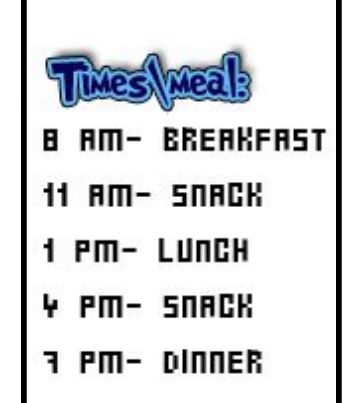
                                                  EAT 5-6 MEALS A DAY

 photo 96561f7b-6268-48ed-be29-2cf76ae9ad04_zpszv1jtjg3.jpg
Dieters often decrease the number of daily meals in an attempt to reduce calories—a big no-no. If you eat six meals a day versus three with the same total calories, you can lose more fat because more meals burn more calories. An efficient way to implement this into your routine is to calculate how many calories you want to consume per day, and spread them evenly across 5-6 meals.


INCORPORATE HIIT TRAINING

Spend at least three days a week doing HIIT (high-intensity interval training). Apply this to any form of cardio that you like, such as running, spinning, stair-climbing, jumping rope, elliptical training or rowing. Start your workouts with a light five-minute warm-up, then alternate back and forth from high to low intensity. Finish with a light five-minute cool-down.


                                                         HAVE A BREAK

When you’ve been dieting for an extensive period of time, some sort of metabolic decline is inevitable. Leptin and various hormones including testosterone will decrease and as a result affect your results.

Adhering to a strict diet becomes increasingly difficult and fat loss always seems to be slower than expected. Not to mention, the psychological component of continued dieting becomes a serious burden. The solution is to take 2 weeks to eat at roughly maintenance. Leptin and testosterone will skyrocket. In addition, you will get that psychological relief. Finally, when you go back to your diet it will feel easier than before and fat loss will resume as expected.




Wednesday, April 25, 2012

Power up your brain w/ these 5 Steps for a better breakfast


Does every morning start like a scene out of Zombieland—and you’re the zombie? Skipping breakfast may be to blame. 


A review of 134 breakfast studies conducted by the University of Leeds in the UK found that your memory, problem-solving skills, verbal fluency, and several other measures of cognitive ability all suffer when you miss the most important meal of the day.


New research provides a road map that can help you get the most from your breakfast and your brain every morning.


5 Steps for a better breakfast

  1. Protein power. Eating a protein-rich breakfast resulted in a nearly 20 percent boost in brain activity compared to either no breakfast or a breakfast high in sugar, Japanese research shows. That’s because protein, unlike sugar, provides your brain with a consistent energy source, the study says. Eggs are a great source of hunger-quelling protein, not to mention a lot of other good stuff.
  2. A "better" source of caffeine. A recent study from the University of Bristol in the UK found that just 20 to 30 milligrams (mg) of caffeine boosts brainpower—regardless of how alert the subjects felt. That’s about 100 mg less than your average cup of coffee. Higher doses didn't provide any additional brain boost. So have a small amount of dark chocolate in the morning. Research has shown dark chocolate improves blood flow and cholesterol levels, and may even help you lose weight. One ounce—or about two 1-inch squares—containing 70 to 85 percent cocoa packs roughly 25 mg of caffeine. (For more great food choices, hit me up and I'll be happy to help)