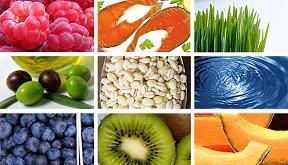
Showing posts with label meal. Show all posts

Saturday, July 4, 2015

Substitute dessert with fruit...


Love dessert? Satisfy your sweet tooth with fruit instead of desserts that are loaded with calories, carbohydrates, and fats. Switch things up by cutting up an apple or pear, sprinkling it with cinnamon, and microwaving it for 1-2 minutes for a healthy treat. Or put a dollop (or three) of fat-free whipped cream on a bowl of strawberries. Not only will you increase your daily servings of fruit, but you’ll cut some calories, too. Talk about a win-win.


SOURCE

Monday, December 2, 2013

5 Super Great Foods that Should be in Your Daily Diet Today!

Superfoods! You’ve heard the term bandied about, often breathlessly. While it may sometimes be treated like the magical edible stuff of comic book characters and mythic heroes, this class of foods is really just exceptionally nutritious and healthful. Superfoods generally contain both exceptional amounts of healthy nutrients and exotically named compounds that do indeed do superhero-like things, such as prevent cancer.

Best of all, many of these superfoods are delicious too.

1. Eat Nuts, Resist Death

If you’ve cut nuts out of your diet because someone convinced you that they were making you gain weight, then have fun dying young. That may sound dramatic, but the verdict reached by a recent study on the health benefits of eating nuts is unequivocal: Nut consumption reduces the risk of death.


Published in the New England Journal of Medicine, the research found that eating just a handful of nuts a day—any kind of nuts!—decreased people’s risk of dying from any cause by 20 percent over the course of 30 years.

Also! People who regularly eat nuts weigh less.

2. Quinoa's Here to Stay
This week the United Nations' Food and Agriculture Committee announced that 2014 is officially the International Year of Family Farming. We’re still a month and change away from the new year, but the end of the International Year of Quinoa is nigh.

Don’t expect that to bring an end to people gushing over all things quinoa.


Thing is, this pseudo-cereal—it’s a seed that behaves like a grain—is a nutritional wonder. Not only is it a complete protein, containing all nine amino acids (a feat no other plant-based food achieves), but it packs a ton of that essential nutrient into its small, tidy package: One cup of quinoa contains a full 8 grams of protein. The same amount of brown rice only contains 5 grams. Furthermore, quinoa sports significant amounts of calcium, phosphorus, magnesium, and iron.

3. Pour On the Olive Oil
If you’re inclined to feel guilty whenever you add an extra pat of butter to something bubbling away on the stovetop, you should cultivate the exact opposite response for those times when you drizzle on more olive oil. See, this is the kind of fat you should be consuming more of. A key component of the Mediterranean Diet, olive oil has been shown to help fend off all sorts of health ills: cancer, heart disease, high blood pressure, obesity, and more.


The latest research on olive oil and the Mediterranean Diet should be of particular interest to women: Consuming olive oil in concert with whole grains, vegetables, fish, and nuts gives women “a 40 percent greater chance of living past the age of 70 with no cognitive or physical ailments and no chronic diseases.”

4. Kale Loves You, but Do You Love Kale Back?
There it is, in your salad, fighting cancer with its sulforaphane. And it’s over there, in your juice, supplying you with more of vitamins A and C then you need in one day. And again, at dinner, kale appears on your plate, sautéed with garlic and chile, finished with a touch of lemon, providing you with the bile acid sequestrants your body can use to lower cholesterol and help avoid absorbing dietary fats.


So the question is, What have you done for kale lately?

5. Got Goji?

The raisin-like dried fruits of two Chinese species of boxthorn are widely extolled for their health properties. Since the fruit became popular in the West, there’s been some debate over its superfood status. Some say that with its astronomically high concentration of vitamin C and many antioxidants, it’s a godsend. Others call it a marketing scam. But goji has centuries of traditional Chinese medicine to back up its healthful rep. Just keep that history in mind when you eat goji berries: In China, they’re treated as a healthful food, something to be cooked and eaten alongside other ingredients—not something to gorge on exclusively simply because it's good for you. 


Source: http://www.takepart.com/photos/five-superfoods/got-goji?cmpid=tpfood-eml-2013-11-30-super

Saturday, March 9, 2013

Tuna Salad Remains to be One of the Quickest, Muscle-Building Meals Available Today

As far as quick, muscle-building meals go, it's tough to beat tuna fish salad. Six ounces of canned tuna, packed in water, contain 40 grams of protein for about 220 calories. Add a large hard-boiled egg and you've contributed 6 more grams of protein for 78 calories. 

A little mayo will up the creaminess but still keep you under a 500-calorie meal—all while providing a powerhouse of workout recovery fuel. 

Thursday, July 5, 2012

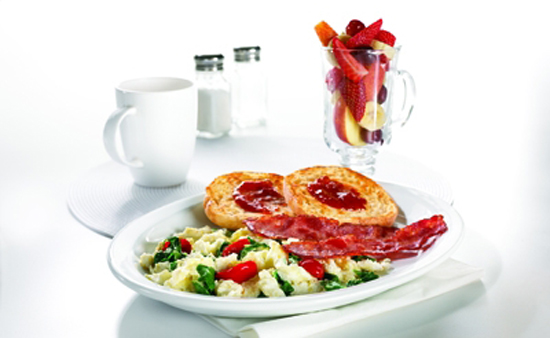
Denny's NEW "Fit Fare" Menu Items like the Fit Slam

Go'n out for breakfast?
Try the Fit Slam® 
Egg whites scrambled together with fresh spinach and grape tomatoes, plus two turkey bacon strips, English muffin and seasonal fruit. 
Forget bacon flapjacks, bacon meat loaf, and maple bacon sundaes: Denny's has moved on to lighter pastures with Fit Fare, a new line of lower-calorie options. The items fall under four different classifications: "lean," with less than 15 grams of fat; "light," which comes in under 550 calories; "protein," for items with 20 grams of protein or more; and "fiber," with at least 8 grams of fiber.


LEAN: Under 15g of fat 
LIGHT: Under 550 calories 
PROTEIN: Over 20g of protein


The menu includes the Fit Slam, with scrambled egg whites, spinach, grape tomatoes, turkey bacon, fruit, and an english muffin; a chicken avocado sandwich and cranberry apple chicken salad for lunch; and tilapia ranchero for dinner. Some of these dishes — like the Fit Slam breakfast and the tilapia ranchero — actually sound healthy in a refreshing way. 


QUESTION: Do you see yourself heading to Denny's more, now that they've created a lighter menu? 


Wednesday, April 25, 2012

Power up your brain w/ these 5 Steps for a better breakfast


Does every morning start like a scene out of Zombieland—and you’re the zombie? Skipping breakfast may be to blame. 


A review of 134 breakfast studies conducted by the University of Leeds in the UK found that your memory, problem-solving skills, verbal fluency, and several other measures of cognitive ability all suffer when you miss the most important meal of the day.


New research provides a road map that can help you get the most from your breakfast and your brain every morning.


5 Steps for a better breakfast

  1. Protein power. Eating a protein-rich breakfast resulted in a nearly 20 percent boost in brain activity compared to either no breakfast or a breakfast high in sugar, Japanese research shows. That’s because protein, unlike sugar, provides your brain with a consistent energy source, the study says. Eggs are a great source of hunger-quelling protein, not to mention a lot of other good stuff.
  2. A "better" source of caffeine. A recent study from the University of Bristol in the UK found that just 20 to 30 milligrams (mg) of caffeine boosts brainpower—regardless of how alert the subjects felt. That’s about 100 mg less than your average cup of coffee. Higher doses didn't provide any additional brain boost. So have a small amount of dark chocolate in the morning. Research has shown dark chocolate improves blood flow and cholesterol levels, and may even help you lose weight. One ounce—or about two 1-inch squares—containing 70 to 85 percent cocoa packs roughly 25 mg of caffeine. (For more great food choices, hit me up and I'll be happy to help)

Friday, February 24, 2012

Know how much daily fiber you need?


Keeping Fit with Fiber
People don't often associate fiber with fitness—but they should! Eating small helpings of fiber-rich foods throughout the day is one way to get the body you want and one of the best ways to keep the body you want. To accompany regular workout routines, I work with my clients to devise a well-balanced nutrition plan. Plans will vary from client to client, but their daily fiber intake always remains the same:

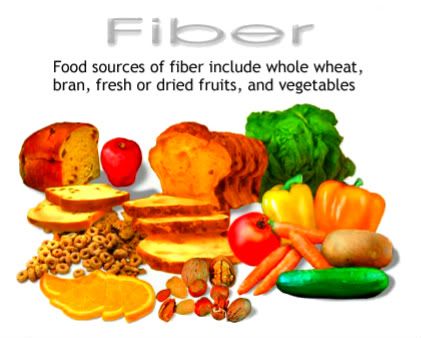
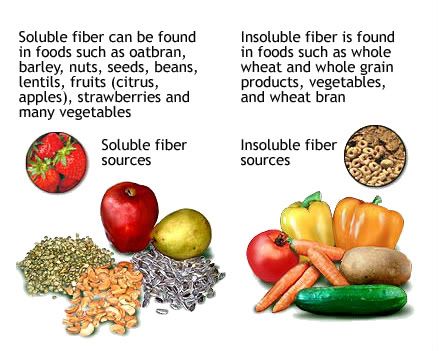
To obtain the above objectives requires adding a serving of fiber to almost every meal and snack. Dietary fiber is the indigestible part of plant foods that moves through the gastrointestinal tract, cleaning it out, aiding elimination and helping to prevent gastrointestinal disease. Moreover, fiber increases the satiety of a meal, adding bulk and substance to keep you feeling full longer.


Simply put: Fiber will fill you up and clean you out!


So eat several servings of fiber throughout the day to keep your tummy happy and your body fueled with energy. Here are 10 easy ways to boost your daily fiber intake:
  1. Add fresh berries to your morning meal
  2. Have dried or fresh fruit for dessert at dinnertime
  3. Add veggies and beans to ready-made soups
  4. Toss a handful of finely chopped veggies into your morning eggs
  5. Add raw nuts or cooked beans to a salad
  6. Eat a whole fruit instead of drinking the juice
  7. Be sure to eat the peels on your potatoes, carrot and fruits
  8. Add a spoonful of a fiber supplement to your morning juice (like Metamucil©)
  9. Swap iceberg lettuce for spinach or dark green lettuce varieties
  10. Snack on crispy and delightful MultiGtain Wafers (be sure to enjoy with plenty of water)


I challenge you to incorporate more fiber into your diet today. Not only will you feel better, but you'll look better too! In the months ahead, I'll continue to add resources and helpful tips to this blog so that you can learn more about how nutrition and fitness work together to keep your body healthy.


Photobucket

Thursday, January 19, 2012

Valentine’s Day Black-Bean Fudge


Valentine’s Day Black-Bean Fudge
Food for Thought:
Super easy to whip together, this dairy-free fudge recipe features a surprising ingredient: black beans.
Don’t be put off by the legumes—you won’t be able to taste them! The beans replace the milk and sugar in a traditional fudge recipe, while providing a decent amount of protein. Naturally sweet carob powder means very little sweetener is needed. Protect your sweetheart’s health with a batch of these for Valentine’s Day!

  • 1 15-ounce can cooked black beans, drained and rinsed (or about 13/4 cups cooked beans)
  • 3/4 cup carob powder
  • 6 tablespoons (tbs) melted coconut oil
  • 4–6 tbs maple syrup or agave nectar
  • 1 teaspoon (tsp) vanilla extract
  • 1 tsp cinnamon (optional)
  • 1/2 tsp sea salt

Place all ingredients in food processor fitted with “S” blade, and blend until totally smooth. Mixture will be thick.

Line 8- by 4-inch loaf pan with plastic wrap, and transfer fudge mixture to pan, spreading mixture to edges.

Refrigerate until totally firm.

Use plastic wrap to lift fudge from pan. Cut into squares and serve. Store in refrigerator.
Makes 24 pieces or 12 servings.

Per Serving:                                                                   

146 calories
6.9 grams (g) fat
2.5 g protein
18.4 g carbs
4.9 g fiber
0 milligrams (mg) cholesterol
101 mg sodium

Thursday, January 5, 2012

Snacking Associated With Healthier Overall Diet


It seems counter intuitive to suggest that people should be snacking more but a study published in the November 14, 2011, edition of the Journal of the American Dietetic Association concluded that increased snacking could positively impact overall diet quality.
 
Claire A. Zizza, PhD, associate professor of nutrition at Auburn University in Alabama, and co-author Beibei Xu, PhD, found that people who snack between meals tend to have healthier diets than those who stick to eating only at regular mealtimes. Study subjects who snacked more frequently consumed less sodium and ate more fruit, whole grains and milk than their counterparts. In addition, the more subjects snacked, the more likely they were to eat both healthy snacks and healthy meals. Still, frequent snackers fell short of eating enough vegetables, and the overall healthiness of the study participants' diets left room for improvement.

Zizza and Xu used data from 11,209 people aged 20 and older who participated between 1999 and 2004 in the larger National Health and Nutrition Examination Survey, which includes interviews and physical exams. The researchers used a standard scoring system that ranks the healthiness of diets on a scale from 1 to 100 (100 being healthiest). They discovered that the more times a day people snacked, the higher they tended to score. Those who reported never snacking scored 49.3, on average, while those who snacked four or more times a day averaged 51.6.