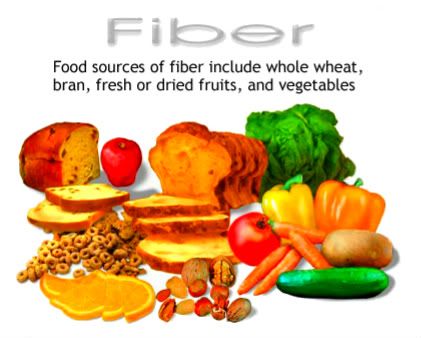
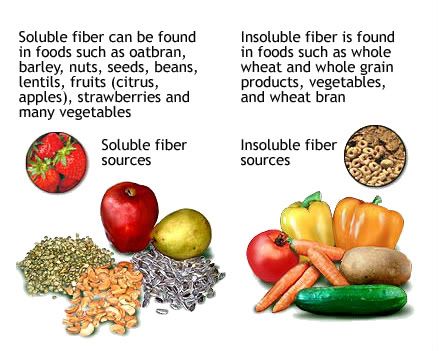
A diet of fiber-rich foods, such as fruits and vegetables, reduces the risk of developing diabetes, heart disease and arthritis. Indeed, the evidence for fiber’s benefits extends beyond any particular ailment: Eating more fiber seems to lower people’s mortality rate, whatever the cause.
That’s why experts are always saying how good dietary fiber is for us. But while the benefits are clear, it’s not so clear why fiber is so great. “It’s an easy question to ask and a hard one to really answer,” said Fredrik Bäckhed, a biologist at the University of Gothenburg in Sweden.

He and other scientists are running experiments that are yielding some important new clues about fiber’s role in human health. Their research indicates that fiber doesn’t deliver many of its benefits directly to our bodies.
Instead, the fiber we eat feeds billions of bacteria in our guts. Keeping them happy means our intestines and immune systems remain in good working order.
In order to digest food, we need to bathe it in enzymes that break down its molecules. Those molecular fragments then pass through the gut wall and are absorbed in our intestines.
But our bodies make a limited range of enzymes, so that we cannot break down many of the tough compounds in plants. The term “dietary fiber” refers to those indigestible molecules.
But they are indigestible only to us. The gut is coated with a layer of mucus, atop which sits a carpet of hundreds of species of bacteria, part of the human microbiome. Some of these microbes carry the enzymes needed to break down various kinds of dietary fiber.
The ability of these bacteria to survive on fiber we can’t digest ourselves has led many experts to wonder if the microbes are somehow involved in the benefits of the fruits-and-vegetables diet. Two detailed studies published recently in the journal Cell Host and Microbe provide compelling evidence that the answer is yes.
In one experiment, Andrew T. Gewirtz of Georgia State University and his colleagues put mice on a low-fiber, high-fat diet. By examining fragments of bacterial DNA in the animals’ feces, the scientists were able to estimate the size of the gut bacterial population in each mouse.
On a low-fiber diet, they found, the population crashed, shrinking tenfold.
Dr. Bäckhed and his colleagues carried out a similar experiment, surveying the microbiome in mice as they were switched from fiber-rich food to a low-fiber diet. “It’s basically what you’d get at McDonald’s,” said Dr. Bäckhed said. “A lot of lard, a lot of sugar, and twenty percent protein.”
The scientists focused on the diversity of species that make up the mouse’s gut microbiome. Shifting the animals to a low-fiber diet had a dramatic effect, they found: Many common species became rare, and rare species became common.
Along with changes to the microbiome, both teams also observed rapid changes to the mice themselves. Their intestines got smaller, and its mucus layer thinner. As a result, bacteria wound up much closer to the intestinal wall, and that encroachment triggered an immune reaction.
After a few days on the low-fiber diet, mouse intestines developed chronic inflammation. After a few weeks, Dr. Gewirtz’s team observed that the mice began to change in other ways, putting on fat, for example, and developing higher blood sugar levels.
Dr. Bäckhed and his colleagues also fed another group of rodents the high-fat menu, along with a modest dose of a type of fiber called inulin. The mucus layer in their guts was healthier than in mice that didn’t get fiber, the scientists found, and intestinal bacteria were kept at a safer distance from their intestinal wall.
Dr. Gewirtz and his colleagues gave inulin to their mice as well, but at a much higher dose. The improvements were even more dramatic: Despite a high-fat diet, the mice had healthy populations of bacteria in their guts, their intestines were closer to normal, and they put on less weight.
Dr. Bäckhed and his colleagues ran one more interesting experiment: They spiked water given to mice on a high-fat diet with a species of fiber-feeding bacteria. The addition changed the mice for the better: Even on a high-fat diet, they produced more mucus in their guts, creating a healthy barrier to keep bacteria from the intestinal walls.
One way that fiber benefits health is by giving us, indirectly, another source of food, Dr. Gewirtz said. Once bacteria are done harvesting the energy in dietary fiber, they cast off the fragments as waste. That waste — in the form of short-chain fatty acids — is absorbed by intestinal cells, which use it as fuel.
But the gut’s microbes do more than just make energy. They also send messages.
Intestinal cells rely on chemical signals from the bacteria to work properly, Dr. Gewirtz said. The cells respond to the signals by multiplying and making a healthy supply of mucus. They also release bacteria-killing molecules.
SOURCE: