Showing posts with label BODY FAT. Show all posts

Wednesday, February 2, 2022

Understanding Your Body Fat Test Results...


Body fat testing is a great way to have an accurate metric for your body composition. There are many ways of getting your body fat tested, but most experts will agree that the DEXA (Dual-Energy X-ray Absorptiometry) scan is the most accurate testing technology available. Hydrostatic weighing was touted as the gold standard for many years, however, hydrostatic weighing is not able to account for bone density. As a result, hydrostatic tests tend to underestimate body fat in athletic individuals with high bone density and overestimate in older adults who have low bone density. These tests can provide a lot of useful data but many of my clients aren’t sure how to make use of the information.


Most people are rarely excited about their baseline body fat test. Keep in mind that your body fat percentage should be viewed as a metric in the same way that your total cholesterol or liver enzyme values are metrics of your health. It’s a data point we can track over time… not a measure of your self-worth. You can see how lifestyle, diet, supplements, medications, aging, and other factors can begin to affect your health. If you have a body composition goal, it can also be useful to have this data point tested again to validate whatever training and nutrition strategy you may be using. However, when it comes to aesthetics, I’d argue how you look and feel is probably far more important than a number on a sheet of paper.


That being said, most people want to know more about where they stand and there are various sources for helping you interpret body fat percentages. One of the most commonly referenced charts is from the American Council on Exercise. You’ve probably seen this as a poster or laminated card on a personal trainer’s desk at your local Gym.

You’ll notice that women will have a higher body fat percentages at any level compared to men due to biological differences. While the ACE chart is an easy quick reference, it doesn’t account for age and the use of the word “obese” may be a bit extreme in some cases.

Another useful chart (see below) is sourced from the research of Dr. Andrew Jackson and M.L. Pollock. I prefer this chart over the ACE chart as it accounts for both gender differences AND age differences. Simply find your age category in the left-hand column of your respective gender, and then look across to see where you fall in your age group.


Body fat percentage is only one metric that people tend to fixate on a little too much. Body fat testing provides another very important number: lean body mass (LBM)

Your LBM is simply your body fat subtracted from your total body weight. LBM includes organs, bones, muscle, and everything else in your body besides body fat. Typically, changes in LBM are primarily from increases or decreases in muscle mass. Changes in bone density can affect your LBM as well, however, a DEXA scan will be able to differentiate between the two. Usually, this is listed as Bone Mineral Content (BMC) on a DEXA report. It’s important to note that when viewing a DEXA report, LBM is calculated by adding the “Lean Tissue” and “BMC” measurements together. A hydrostatic test will give you LBM and body fat only.


If your goal is to get leaner, you need to decrease your body fat percentage while maintaining (or increasing) your LBM. It’s important to keep an eye on both numbers as you work towards your goal. 

Your LBM is also very useful for helping us calculate your daily nutritional requirements (which we’ll discuss in a future posting). Hopefully, you have a better understanding of body fat percentages and feel better about your numbers after reading this posting.

Questions? Comments? Get at me!


Wednesday, July 6, 2016

5 TIPS TO REACH SINGLE DIGIT BODY FAT

DRINK MORE WATER

Water is the medium in which most cellular activities take place, including the transport and burning of fat. Drink at least 1 ounce of water per 2 pounds of body weight a day (that's 100 ounces for a 200-pound person). Keep a 20-ounce water bottle at your desk, fill it five times a day, and you're set.


INCREASE VEGETABLE CONSUMPTION


Vegetables are nutrient-dense, meaning they pack maximum nutrition value with minimal calories, leaving you more full on fewer calories. You should aim to consume five servings a day of veggies, whether as a snack, on a sandwich or on the side of a chicken breast.


                                                  EAT 5-6 MEALS A DAY

 photo 96561f7b-6268-48ed-be29-2cf76ae9ad04_zpszv1jtjg3.jpg
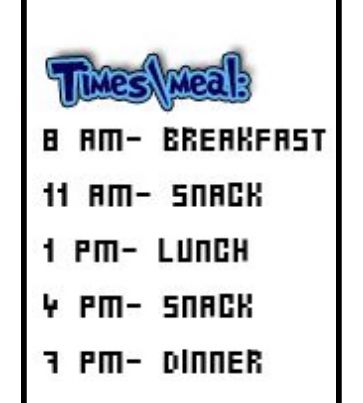
Dieters often decrease the number of daily meals in an attempt to reduce calories—a big no-no. If you eat six meals a day versus three with the same total calories, you can lose more fat because more meals burn more calories. An efficient way to implement this into your routine is to calculate how many calories you want to consume per day, and spread them evenly across 5-6 meals.


INCORPORATE HIIT TRAINING

Spend at least three days a week doing HIIT (high-intensity interval training). Apply this to any form of cardio that you like, such as running, spinning, stair-climbing, jumping rope, elliptical training or rowing. Start your workouts with a light five-minute warm-up, then alternate back and forth from high to low intensity. Finish with a light five-minute cool-down.


                                                         HAVE A BREAK

When you’ve been dieting for an extensive period of time, some sort of metabolic decline is inevitable. Leptin and various hormones including testosterone will decrease and as a result affect your results.

Adhering to a strict diet becomes increasingly difficult and fat loss always seems to be slower than expected. Not to mention, the psychological component of continued dieting becomes a serious burden. The solution is to take 2 weeks to eat at roughly maintenance. Leptin and testosterone will skyrocket. In addition, you will get that psychological relief. Finally, when you go back to your diet it will feel easier than before and fat loss will resume as expected.