
Showing posts with label training. Show all posts

Wednesday, July 6, 2016

5 TIPS TO REACH SINGLE DIGIT BODY FAT

DRINK MORE WATER

Water is the medium in which most cellular activities take place, including the transport and burning of fat. Drink at least 1 ounce of water per 2 pounds of body weight a day (that's 100 ounces for a 200-pound person). Keep a 20-ounce water bottle at your desk, fill it five times a day, and you're set.


INCREASE VEGETABLE CONSUMPTION


Vegetables are nutrient-dense, meaning they pack maximum nutrition value with minimal calories, leaving you more full on fewer calories. You should aim to consume five servings a day of veggies, whether as a snack, on a sandwich or on the side of a chicken breast.


                                                  EAT 5-6 MEALS A DAY
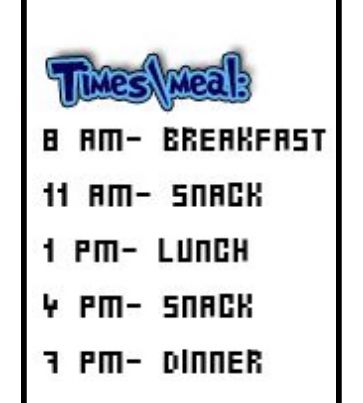
 photo 96561f7b-6268-48ed-be29-2cf76ae9ad04_zpszv1jtjg3.jpg
Dieters often decrease the number of daily meals in an attempt to reduce calories—a big no-no. If you eat six meals a day versus three with the same total calories, you can lose more fat because more meals burn more calories. An efficient way to implement this into your routine is to calculate how many calories you want to consume per day, and spread them evenly across 5-6 meals.


INCORPORATE HIIT TRAINING

Spend at least three days a week doing HIIT (high-intensity interval training). Apply this to any form of cardio that you like, such as running, spinning, stair-climbing, jumping rope, elliptical training or rowing. Start your workouts with a light five-minute warm-up, then alternate back and forth from high to low intensity. Finish with a light five-minute cool-down.


                                                         HAVE A BREAK

When you’ve been dieting for an extensive period of time, some sort of metabolic decline is inevitable. Leptin and various hormones including testosterone will decrease and as a result affect your results.

Adhering to a strict diet becomes increasingly difficult and fat loss always seems to be slower than expected. Not to mention, the psychological component of continued dieting becomes a serious burden. The solution is to take 2 weeks to eat at roughly maintenance. Leptin and testosterone will skyrocket. In addition, you will get that psychological relief. Finally, when you go back to your diet it will feel easier than before and fat loss will resume as expected.




Thursday, December 6, 2012

The 5 Biggest Myth's in the Gym Today...


Make the Most of Your Workout
Some things are beyond question—planetary motion, LeBron James's defense. But when it comes to weight-lifting advice, it pays to be a skeptic. "The gym is filled with false information," says strength and conditioning coach Josh Henkin, C.S.C.S. Here are five weightlifting myths that might be holding you back, and the fast fixes that will have you seeing results again.


MYTH 1: GOOD FORM IS EVERYTHING IN THE GYM

The claim: Performing exercises the way they're intended will maximize results.

The truth: Sometimes cheating can boost your gains. Using a bit of momentum in the lateral raise, for example, increases the torque of your shoulder joint, helping you raise a heavier weight to the point at which your deltoids take over, notes a study in the European Journal of Applied Physiology. "You can achieve a similar effect with biceps curls," says sports biomechanist Bret Contreras, C.S.C.S. Just keep the body English to a minimum.

MYTH 2: SLOW LIFTING BUILDS HUGE MUSCLES

The claim: Deliberate, controlled lifts ensure proper form and accelerate muscular gains.

The truth: Slow and steady is a smart strategy for lowering a weight, but lifting it quickly activates more type II muscle fibers, which have the greatest growth potential. 
Bottom line: "Vary your lifting speed," says Henkin. "In the bench press, for example, pause every 5 inches on the way down, and then push up explosively." Varying your pace will fatigue you faster, so start doing this on the last reps of your final set. (Want more ways secrets to size and strength? Try the Maximum Mass workout to get bigger, faster.)


MYTH 3: IF YOU WANT TO GROW BIG, YOU HAVE TO LIFT BIG

The claim: Heavy weights and low reps (5 or fewer) trigger the greatest increase in muscle mass.

The truth: The sweet spot is 6 to 15 reps, says Brad Schoenfeld, C.S.C.S., author of The MAX Muscle Plan. Lifting a moderate weight in that rep range creates an optimal balance of muscular tension and metabolic stress. That in turn maximizes your protein production after exercise as well as the number of contracting mechanisms within a muscle cell. The result: serious gains in size, strength, and force production.

MYTH 4: RESTING BETWEEN SETS IS CRITICAL

The claim: Giving your muscles a break lets you put your all into every set.

The truth: Staying active between sets boosts performance. "Doing low-intensity, noncompeting moves, called fillers, between sets enhances mind-muscle communication without compromising recovery," says Mike Wunsch, C.S.C.S., director of programming at Results Fitness. Try lateral band walks between lower-body sets and I-raises between upper-body sets.

MYTH 5: POST-WORKOUT SHAKES BOOST MUSCLE GROWTH

The claim: There's a window of opportunity after a workout when muscles are primed to respond to protein.

The truth: That idea is based on a small number of short-term studies that evaluated people who trained after fasting overnight, says Alan Aragon, M.S., a Men's Health nutrition advisor. Your focus should be on total daily protein. "Shoot for 1 gram per pound of body weight a day," he says. Falling short? Down a protein shake whenever it's most convenient for you. (Store-bought shakes can often times be over-priced and low on protein)

